ZA-1 jet propulsion
Trace hydrogen combustion from the air inlet to the rearward propulsive flow that produces thrust.
Normal operation Illustrated walkthrough
Starting conditions
The concept uses a hydrogen combustion gas turbine in atmospheric flight. The air inlet, fuel supply and separate thermal paths are available in the study.
Operating sequence
Admit and compress air
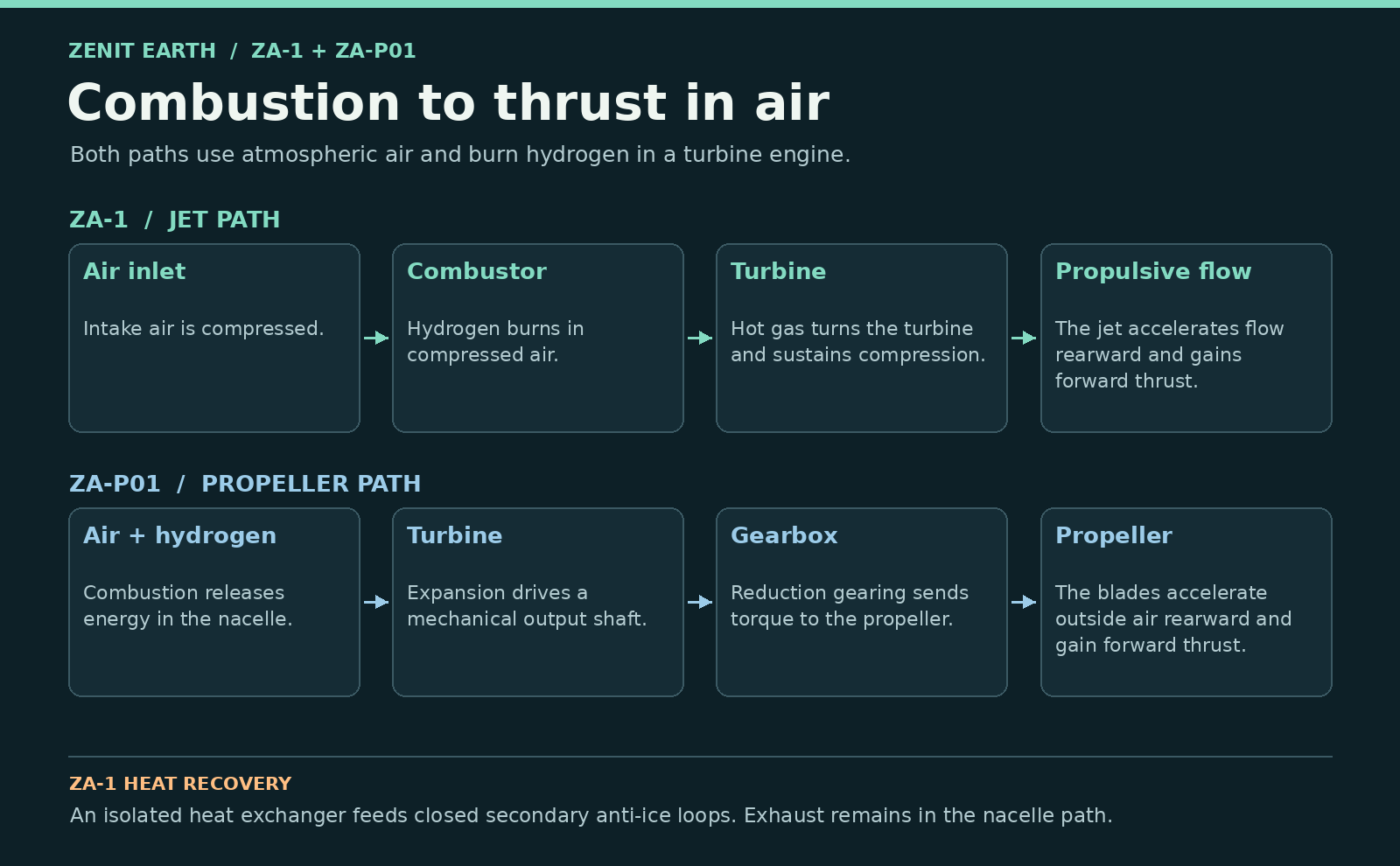
The engine compresses incoming atmospheric air.
Burn hydrogen in the chamber
Combustion adds energy to the gas, which expands through the turbine.
Deliver useful thrust
The jet accelerates its propulsive flow rearward while turbine work sustains engine compression.
Route recoverable heat
The nacelle exchanger sends heat to independent secondary fluid loops for the optional anti-ice function.
Hold and recovery
Keep the associated thermal demand within verified capacity. The diagram illustrates the energy path and the aircraft requires its own operating qualification.
Model and references
See the two aircraft propulsion diagramsZENIT concept procedure. Models and replays use illustrative conditions.