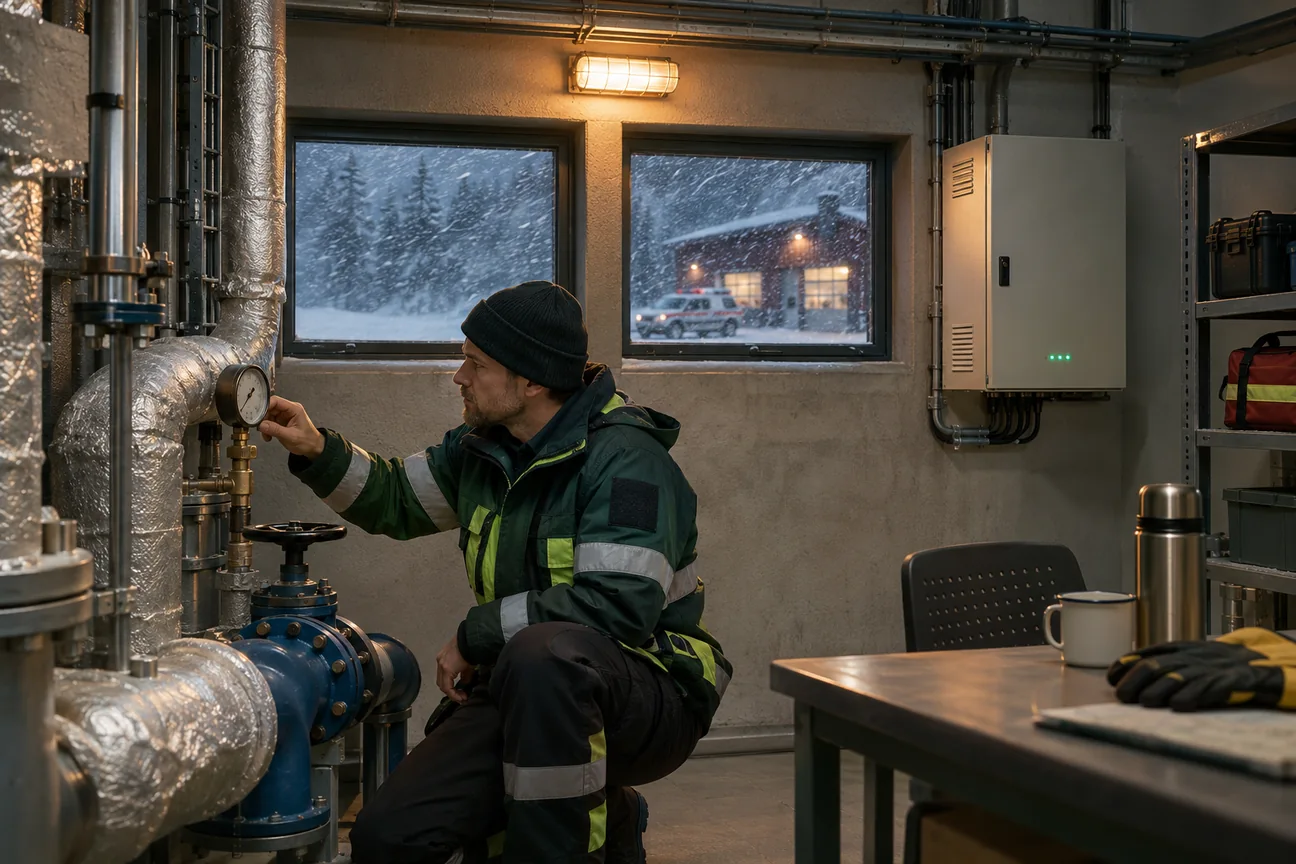
SafeSpot winter outage
Prioritize essential services and keep the local picture usable when the grid and regional data link go down.
Follow a ZENIT procedure from its starting conditions to the checks that decide whether it can proceed.
Browse all procedures ↓
Prioritize essential services and keep the local picture usable when the grid and regional data link go down.
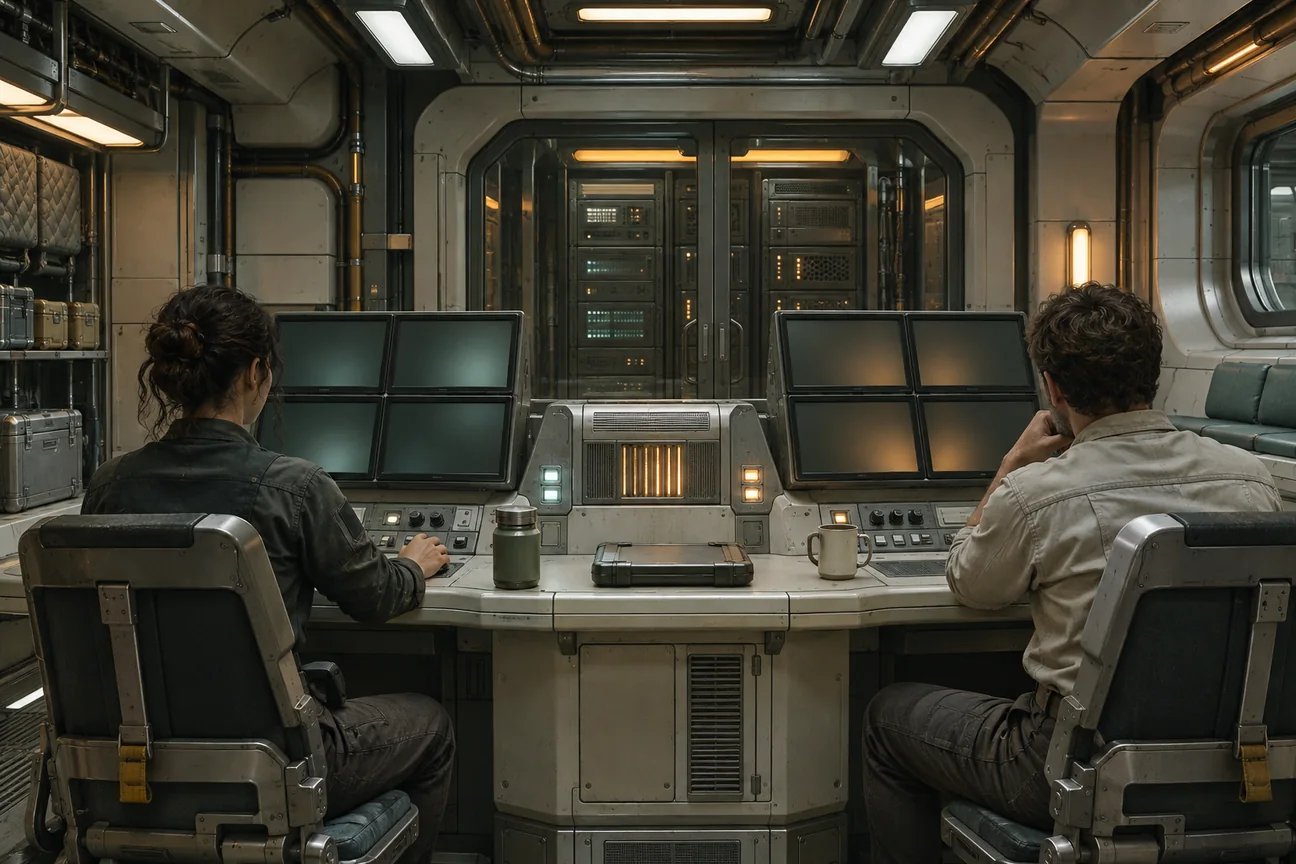
Follow the protected power feeds and see what a stale CMC reference does to coil permission.
57 procedures
No matching procedures. Try clearing a filter or using a shorter search.
Follow the Earth core from standby to qualified delivery at the separate SERAT Energy Island.
Interactive replayA single stellarator-derived core transfers heat through a controlled interface to the separate SERAT Energy Island.
Interactive replayThe accountability model compares measured fuel receipts, use, permitted venting and remaining inventory.
Interactive replayThe optional Earth module uses electricity and treated water to produce conditioned hydrogen for storage and distribution.
Interactive replayFollow readings across the proposed Earth Research Facility. The cutaway opens the NEXUS and LSI suite and traces links to the SafeSpot services, observation mast and independent safety island.
Interactive replayThe SafeSpot Pack proposal ties reserve electricity to a defined set of lighting, communications and other essential loads.
Interactive replayPrioritize essential services and keep the local picture usable when the grid and regional data link go down.
Interactive replayThe Heat-Service Module matches available source heat to a specific customer temperature and demand.
Interactive replayStep inside the Earth Research Facility’s NEXUS and LSI suite. The cutaway follows SafeSpot and campus readings from the intake racks to the operator desks, the event recorder and regional reporting.
Interactive replayZA-1 recovers exhaust heat inside the nacelles. Isolated secondary loops warm independently controlled inlet, wing and tail zones.
Interactive replayTrace hydrogen combustion from the air inlet to the rearward propulsive flow that produces thrust.
Illustrated walkthroughHydrogen combustion drives a nacelle turbine. A reduction gearbox and shaft carry mechanical power to the propeller.
Interactive replayZB-1 places protected hydrogen equipment and the machinery in separate spaces, leading to an illustrative stern drive.
Interactive replaySERAT coordinates separate cooling loops for the hydrogen combustion engine and essential electronics.
Interactive replayCompare SERAT’s response to reduced coolant flow and a stopped pump.
Illustrated walkthroughFollow a parked-engine regulator fault from the shutoff request to independently verified isolation.
Illustrated walkthroughZC-1 supplies its hydrogen combustion engine from monitored storage and sends mechanical power to the wheels.
Interactive replayTwin mechanical shaft lines drive the cruise ship’s controllable-pitch propellers. Separate auxiliary pump-jets support harbour manoeuvring.
Interactive replayThe primary hydrogen turboshaft sends mechanical power through the ZMG-1D gearbox to the main rotor and Fenestron.
Interactive replayZP-1 uses hydrogen combustion and mechanical drive to power waterjets in its two hulls.
Interactive replayFollow a compromised research zone and see which services a refuge needs as power availability changes.
Illustrated walkthroughAtlas ranks a small set of observations by expected information gain while protecting energy, time, data and return reserves.
Interactive replayThe Central Magnetic Core provides reference and timing. Independent witnesses check the reference before it is used for coordination.
Interactive replayAGCM verifies route and docking geometry before the fleet commits to acceleration or a close approach.
Interactive replayCompare a fresh fore-sector observation with cooling limits or an expired input in the offline allocator.
Interactive replayCompare what local and fleet operators can see when a cooling-flow sample expires or reporting drops out.
Interactive replaySix phases trace a proposed planetary-cruiser landing, from acquisition of the landing base to mechanical support.
Interactive replayThe Diagnostic Hull Panel combines strain, temperature and acoustic arrivals to identify where inspection is needed.
Interactive replayGENI coordinates the space shield’s five layers across five hull sectors, giving 25 controlled regions.
Interactive replayFollow the air the crew breathes through an Anorak-based cutaway. Trace the return ducts, see how the ship removes carbon dioxide and adds oxygen, then isolate a compromised zone.
Interactive replayThe Integrated Hull Water Matrix (IHWM) routes shield water through Loop C to segmented cells around occupied areas. The retained water provides passive shielding.
Interactive replayTrace the local reactor trip and the two paths that still handle stored field energy and residual heat.
Illustrated walkthroughTrell stays docked outside Fronak. Only the sealed canister crosses into the receiving cradle. The replay follows the host port, required services, custody receipt and lab result.
Interactive replayFollow a simulated permission check and fault isolation at an inert test load on the dedicated defensive feed.
Interactive replayHow could Zorak’s twin reactors power a long voyage? A proposed fuel loop recovers what the plasma did not use. Onboard stock replaces what fused or could not be reused.
Interactive replayFollow two protected power feeds from Zorak’s fusion cores through SERAT to the THD-1A centreline drive. The shield coils have their own feed.
Interactive replaySee when a loss of heat rejection during sustained thrust leads to derating or a propulsion hold.
Interactive replayTrace the proposed handover from a compatible first-aid shuttle to the receiving team.
Procedure referenceFollow the protected power feeds and see what a stale CMC reference does to coil permission.
Interactive replayExplore the Qi Vanguard flagship’s proposed Telemetry Coordination Chamber (TCC). The deck cutaway shows the crew consoles, independent bus feeds, communications and protected recorder next to a mission operations passage.
Interactive replayA sample moves from lunar collection through a monitored handoff to cold analysis and archive.
Interactive replayThe surface station’s dedicated reserve charges from available fusion electricity after protected services are supplied.
Interactive replayThe lunar plant meters fuel, recovers verified unburned material and sends conditioned electricity to SERAT.
Interactive replayThe outpost drill follows one refuge branch from loss of fusion supply through protected reconnection.
Interactive replayLekor, Lomec and Larko share a lander design and a proposed common crew-transfer module.
Interactive replayThe manufacture study moves from an unpowered coil-fit article to measured evidence for placement and control.
Interactive replayFollow a single Qi survey sortie from orbital staging through landing, roadster and drone deployment, and recovery aboard Norak.
Illustrated walkthroughChoose a human-driven roadster and verify the bay, route, cabin and return reserves before release.
Procedure referenceInspect the returning roadster, secure it unoccupied and move it to the appropriate servicing state.
Procedure referenceCompare a permitted enable, a veto and a local trip on a simulated isolated branch.
Interactive replayThe Qi fleet, Earth facilities and CORAC use isolated coolant branches and the same checks for heat load, remaining capacity and backup power. The final heat sink depends on the operating environment.
Interactive replayThe evidence checker traces each engineering claim to its source version, evidence maturity and measured or modeled inputs.
Interactive replayZENIT checks identity, current duty assignment and the safety state before releasing a restricted operation.
Interactive replayThe shared sequence checks confinement, cooling and local protection before allowing a core to supply energy to SERAT.
Interactive replayCompare a ready reserve with an unavailable reserve after the primary feed drops.
Interactive replayThe reserve scheduler tests electrical power, usable energy and thermal capacity together before assigning optional loads.
Interactive replayExplore the Qi Fleet Telemetry Unit cutaway. Follow a reading from the vessel’s sensors through the ZTIA checks, then see how it reaches operators, the event recorder and local safety systems.
Interactive replay