Zorak propulsion and shield power
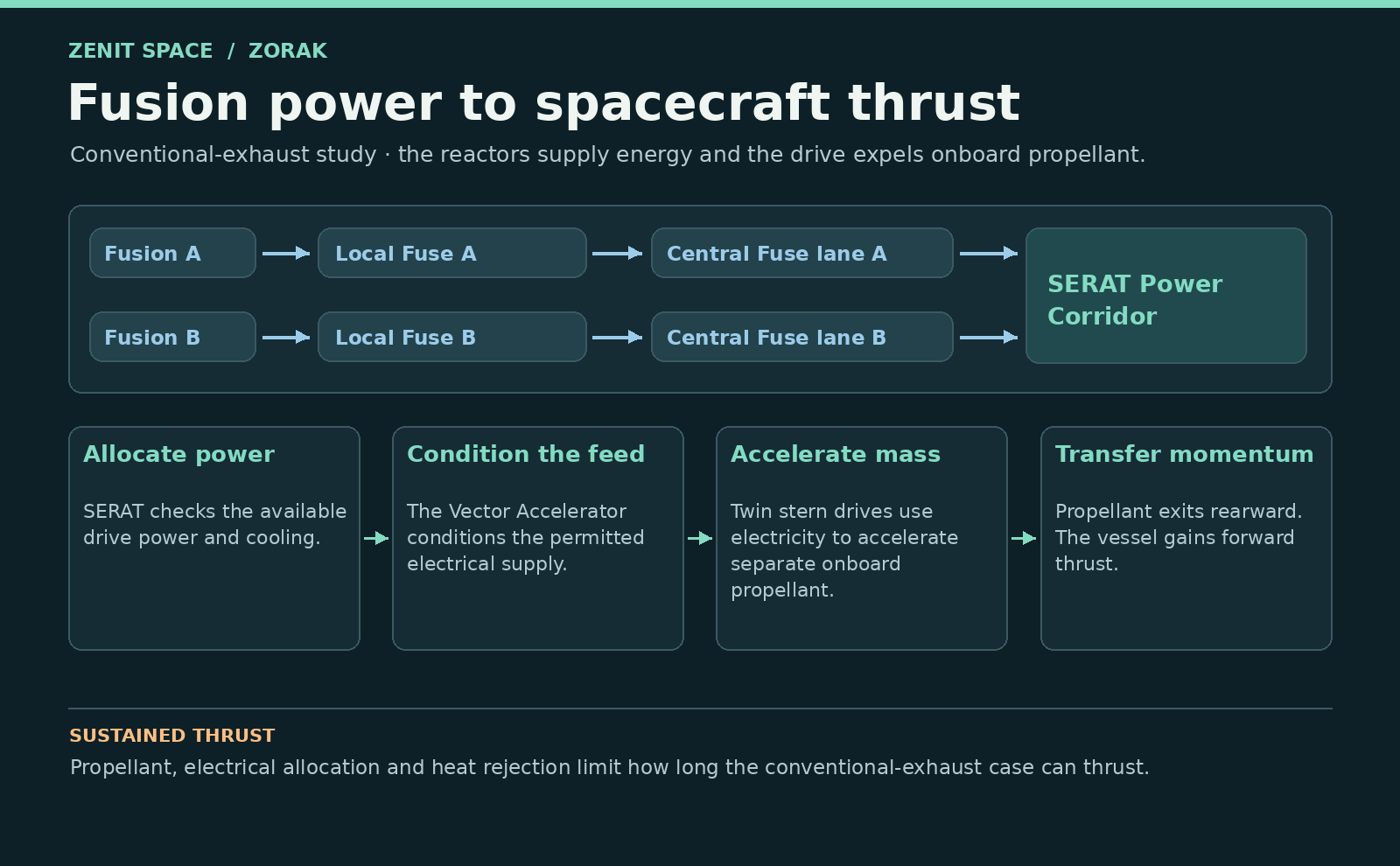
Follow two protected power feeds from Zorak’s fusion cores through SERAT to the THD-1A centreline drive. The shield coils have their own feed.
Normal operation Interactive replay
Starting conditions
This Zorak example begins with protected feeds from Fusion A and B available. The drive request depends on power, propellant and heat-rejection capacity.
Operating sequence
Fusion A and Fusion B
Each core heats onboard fuel into plasma and confines it with magnetic fields. Conversion equipment supplies conditioned electricity to the core’s power lane. Each core has independent shutdown and cooling.
Local Fuse A and B
Each source feeds its own Local Fuse Chamber. If a core trips, its chamber isolates the affected feed. Available output and cooling determine which loads the remaining lane can support.
Central Bidirectional Fuse
The central assembly coordinates the two feeds. Its separate protected lanes carry the available electrical output into the SERAT Power Corridor.
Separate SERAT trunks
SERAT checks available electrical power and cooling before releasing a propulsion allocation. The shield reserve and its coil drivers have a separate feed. Four main cooling chambers and two independent crew cooling chambers feed radiator panels that fold into separate hull bays. A shortage can reduce or hold a drive request.
Vector Accelerator
GENI coordinates the thrust request using the Central Magnetic Core reference. AXIOM retains final authority. The Vector Accelerator conditions the permitted electrical feed to the centreline corridor.
THD-1A centreline drive
The model shows a single corridor with a cyan stern outlet and amber bow outlet. Stern exhaust produces forward thrust. Bow exhaust produces braking thrust. The changeover waits for neutral readback and the burn ends at the confirmed stop.
Hold and recovery
Review remaining power, cooling and drive availability before increasing thrust or committing to a later braking requirement.
Model and references
Open the interactive cycleOnboard fusion supports long-duration operation while the fuel and cooling budgets allow. In the jet propulsion study, the drives also need their own propellant. Endurance depends on the available reserves and how much thrust the voyage requires.
ZENIT concept procedure. Models and replays use illustrative conditions.