ZC-1 electronics cooling study
How SERAT responds to cooling loss
When coolant flow drops, a circuit can have enough electricity and still overheat. In the ZC-1 study, SERAT checks whether the dedicated electronics loop can remove the heat from essential equipment before recommending an optional load.
Cooling-loss simulation results
Scenario inputs · 120 W essential + 180 W optional
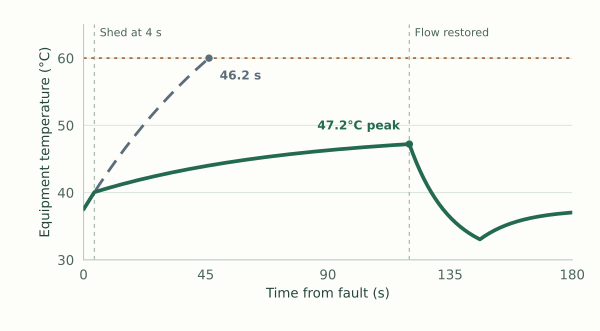
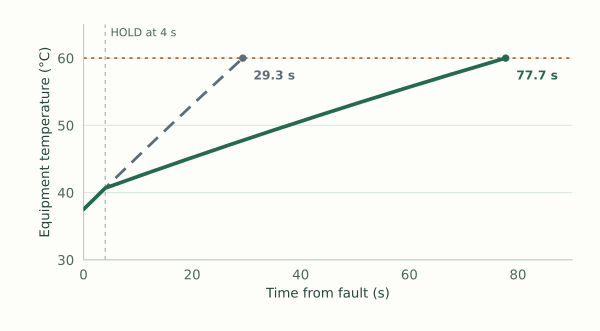
- Optional load shed at 4 s
- Optional load stays on
- 60°C study limit
Coolant flow drops
The pump stops
When does SERAT hold?
SERAT checks available power, usable reserve energy and cooling together. When essentials fit and the full load exceeds a limit, SERAT can recommend shedding optional demand and report DERATED. If essentials alone exceed a limit, or if coolant readings expire, it reports HOLD and blocks new requests. Independent local protection handles trips, and AXIOM retains the physical veto.
When can the load return?
In the reduced-flow case, normal flow returns at 120 s. SERAT readmits the optional load at 146 s, after verified cooling, temperature and reserve checks. A separate run shows that a ten-second recovery is too brief for readmission under the study rules.
Study inputs and model scope
The study begins at 37.5°C with a 25°C coolant inlet. It uses assumed cooling conductance for reduced flow and pump stop and applies the advised shed immediately at the 4 s report. The curves show modeled equipment temperature. Physical testing must establish the actual cooling response and the time from fault detection to confirmed load reduction.
Study reference · ZENIT SERAT Cooling-Loss Study R1, 13 November 2026.