ZENIT Earth / Hydrogen cruise ship
ZCS-1.
Explore the recovered ZENIT cruise ship: layered passenger decks above four isolated hydrogen blocks, two machinery rooms and twin mechanically driven propellers. New auxiliary pump-jets illustrate harbour manoeuvring.
- Main propulsion
- Twin controllable-pitch propellers
- Recorded machinery
- 4 main hydrogen engines
- Hydrogen arrangement
- 4 isolated fuel blocks
- New docking proposal
- Bow & stern pump-jets
ZCS-1 / System reference
The system descriptions are available below.
Exterior
Drag to orbit. Use arrow keys when the model is focused.
ZCS-1 / Final main-propulsion configuration
Hydrogen to twin propellers
Mechanical propulsion with separate auxiliary services.
- Condition fuelLiquid hydrogen → vaporisation and gas conditioning
- Generate torqueHydrogen combustion engines in two machinery rooms
- TransmitCombining reduction gearboxes and shaft lines
- PropelTwin controllable-pitch propellers
NEW PROPOSAL / HARBOUR MANOEUVRING
Sideways control.
Propellers for the voyage.
Auxiliary steerable pump-jets near the bow and stern would provide low-speed manoeuvring thrust. The proposal uses separate hydrogen-driven auxiliary machinery and hydraulic power transfer.
Two positions illustrate the idea. Actual unit count, thrust, drive power, intake geometry and performance in wind or current require a naval-architecture study.
READ THE DOCKING VECTORS
Pump-jet illustration is off.
Choose a docking command to reveal the two proposed pump-jets. Cyan arrows show discharged water, opposite the resulting thrust on the hull.
The controls highlight equipment and water-discharge direction in Safety view. They do not move the ship or calculate a docking manoeuvre.
Technical background: marine steerable pump-jets ↗RECOVERED DESIGN / 29 JULY 2026
The ship behind the model.
The recovered exterior and mechanical-propulsion drawing preserve the original ZCS-1 idea. The current model follows the final twin-propeller configuration and adds the auxiliary pump-jet proposal above.
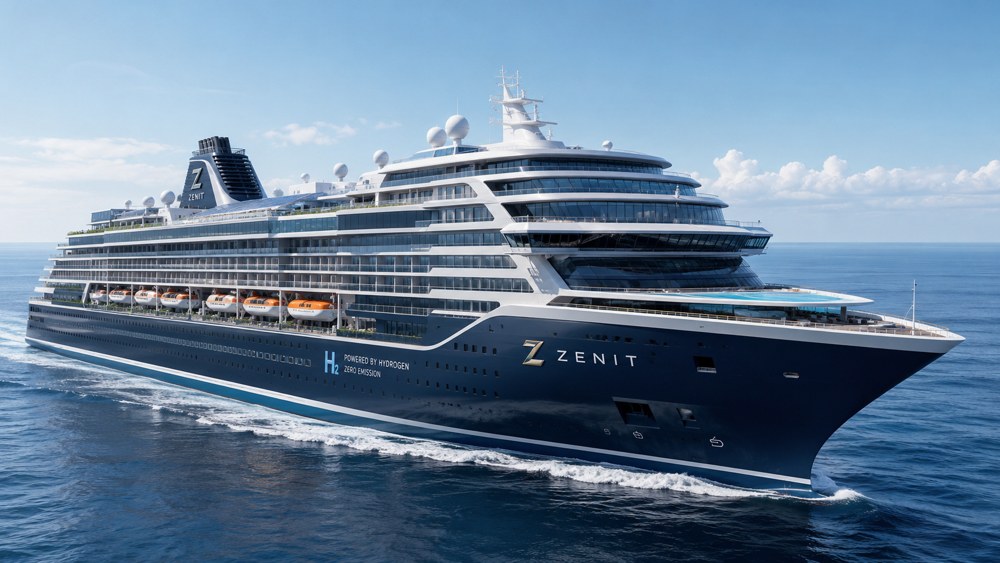
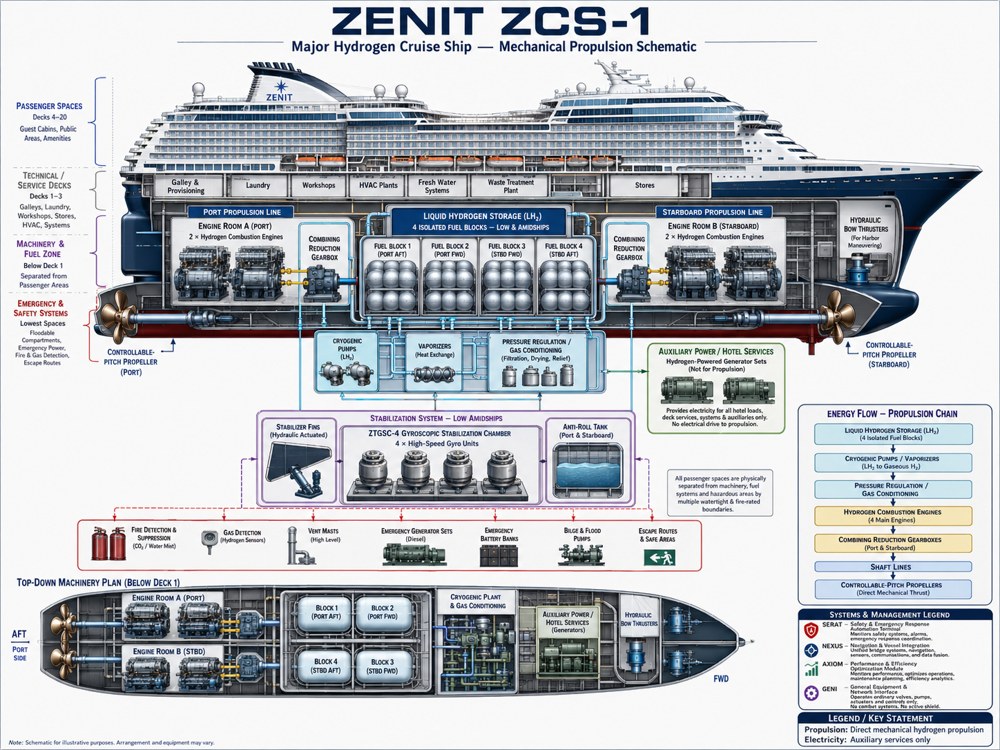
Historical illustrations retain their original wording. Equipment details, old system-role descriptions and emissions wording are not current qualification or measured-performance claims.