ZENIT Earth / Hydrogen combustion car
ZC-1.
Explore ZENIT’s hydrogen combustion car. Follow the fuel from storage to the engine, then look inside the systems that monitor pressure and manage combustion vapour.
ZC-1 / System reference
The system descriptions are available below.
Exterior

Drag to orbit. Use arrow keys when the model is focused.
ZC-1 / Power path
From hydrogen to motion
SERAT-EVR-1 controls combustion vapour.
- StoreOnboard hydrogen storage
- RegulatePressure monitoring, isolation and controlled supply
- CombustHydrogen combustion engine
- DriveMechanical drivetrain to the wheels
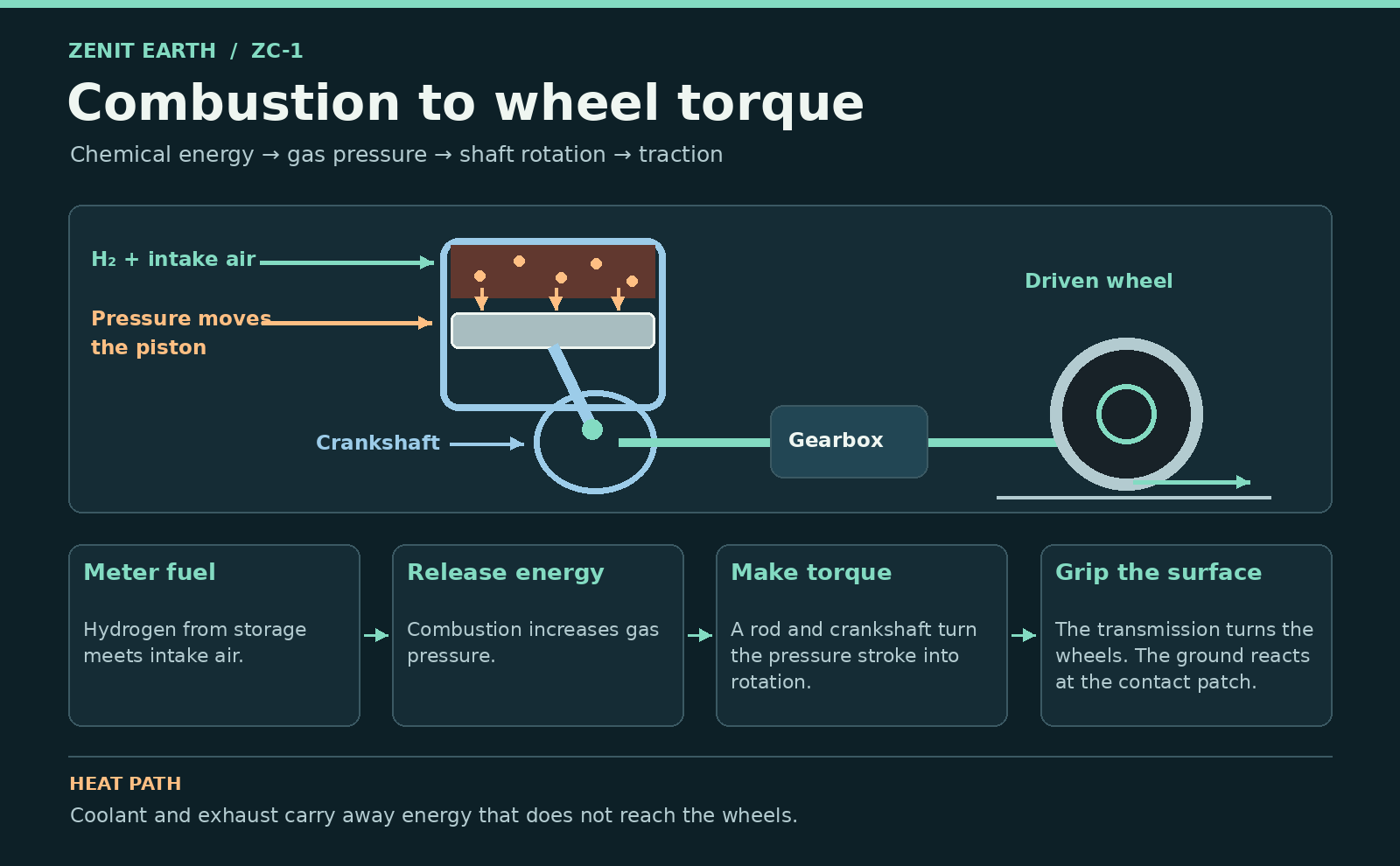
How combustion turns the wheels
ZC-1 / SERAT-APRS-V1
Fuel pressure and isolation
Design study
Hydrogen leaves protected storage through a shutoff valve and regulator. The regulated rail supplies the injectors, which meter fuel into the engine. Each part of the path has its own pressure requirements.
-
Storage
Tank and main shutoff
Set the tank’s nominal working pressure and rate its outlet components for the storage side.
-
Fuel delivery
Regulator, rail and injectors
Define a separate rail operating range and protect the downstream components against regulator failure.
-
Combustion
Cylinder and ZSP-1 ignition concept
Verify chamber pressure and temperature across the engine test range before assigning the spark plug’s operating limits.
The US Department of Energy lists 700 bar as a nominal vehicle tank pressure. The ZC-1 storage, rail and chamber ratings are open design values.
Parked-engine regulator fault
In this walkthrough, a valid reading reports rail pressure above the intended range. The protective response requests fuel shutoff and holds engine start. A separate check determines whether the fuel path is isolated.
Shutoff requested · Isolation unconfirmed
Valve position feedback is missing, or the downstream evidence still shows supply from the tank. The system reports isolation as unconfirmed and keeps the start hold in effect.
Isolation verified · Restart held
Independent valve position feedback and the downstream check agree that supply from the tank has stopped under the test conditions. Residual pressure is assessed separately. Restart requires the fault to be resolved, safe conditions verified and the reset authorized.
Vehicle tank pressure reference UN Regulation No. 134 · Hydrogen fuel system requirements Earth infrared systems