The ZENIT Program · Scientific report ·
What the ZENIT Program could achieve
ZENIT’s clearest first achievement would be to keep essential services running through defined power and cooling faults. An Earth pilot and an uncrewed satellite could test that capability. A route trial could measure whether hydrogen reduces emissions. Net fusion electricity and longer Qi Vanguard Fleet missions depend on further physical demonstrations.
What each stage could achieve
- Earth pilot and route trial
- Keep critical loads within voltage and temperature limits during defined faults. Meter useful heat delivered and establish whether a hydrogen vessel lowers emissions for the same transport service.
- Uncrewed orbital flight
- Show that a small satellite can isolate a fault locally and confirm recovery from its telemetry. Repeat flights could test coordinated observations by several spacecraft.
- Advanced research
- Demonstrate net fusion electricity at the grid connection, lower water resupply for crewed missions and measurable gains in spacecraft protection or propulsion.
ZENIT’s current evidence includes designs and simulations. This report uses results from comparable systems and worked examples to define what could be measured on ZENIT hardware. The cost reports scope a partner-built Earth pilot and a 50–150 kg orbital demonstrator. [1]
Earth Program
Critical services that stay online
SERAT tracks power, stored energy and cooling capacity. The ZC-1 cooling-loss simulation uses scenario inputs of 120 W essential and 180 W optional to test whether shedding the optional load keeps the essential load within temperature limits. An Earth pilot could measure how long critical loads stay online during faults compared with the site’s existing controls, and meter recovered heat delivered at the required temperature. [1]
Lower-emission trips on suitable routes
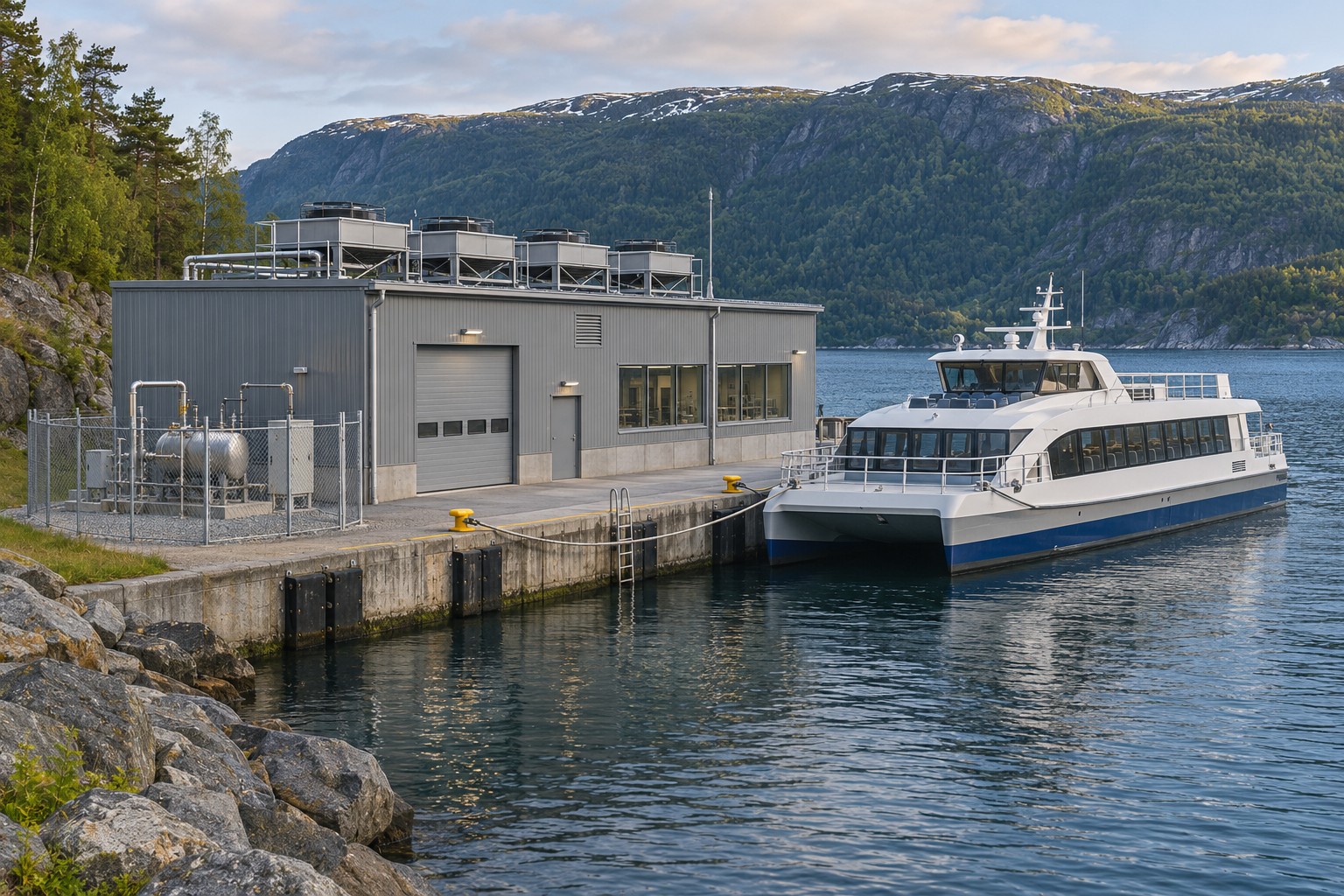
A ZP-1-derived demonstrator could establish where hydrogen is viable for sustained marine duty. Compare with the incumbent vessel and a battery-electric option where feasible, matching route, speed and passenger or cargo load. Measure well-to-wake greenhouse gases per passenger-nautical mile or tonne-nautical mile, plus refuelling time and availability. For combustion configurations, measure nitrogen oxides (NOx) over the duty cycle and include any pilot fuel. These data can inform ZC-1 and ZA-1 research, with separate testing for their own duty and storage conditions. [2] [3]
At 55 kWh/kg H2, the U.S. DOE’s 2022 system benchmark for PEM electrolysis, input electricity at 50 or 400 g CO2e/kWh contributes 2.75 or 22 kg CO2e/kg H2. Those intensities are illustrative. A route assessment also counts conditioning, delivery, bunkering and use. [4]
Fusion electricity and useful process heat
A successful fusion plant could supply grid power, industrial heat and electricity for optional electrolysis. The relevant threshold is net electricity at the site boundary over a representative operating cycle. ITER’s plasma gain compares fusion power with power delivered for plasma heating. A plant must also account for pumps, magnets, heating, refrigeration and every other on-site load. Sustained operation depends on extraction of heat, radiation-tolerant materials, fuel-cycle closure for a deuterium–tritium design and maintainability. A conventional heat-source rig can test the SERAT interface while reactor research proceeds. [5]
300 MW of recoverable heat to a power cycle × 40% efficiency − 90 MW of site electricity demand = 30 MW net electric output. At 35% conversion the same site exports 15 MW. Grid export over time also depends on startup, downtime and part-load operation.
Space Program
Fault recovery in orbit
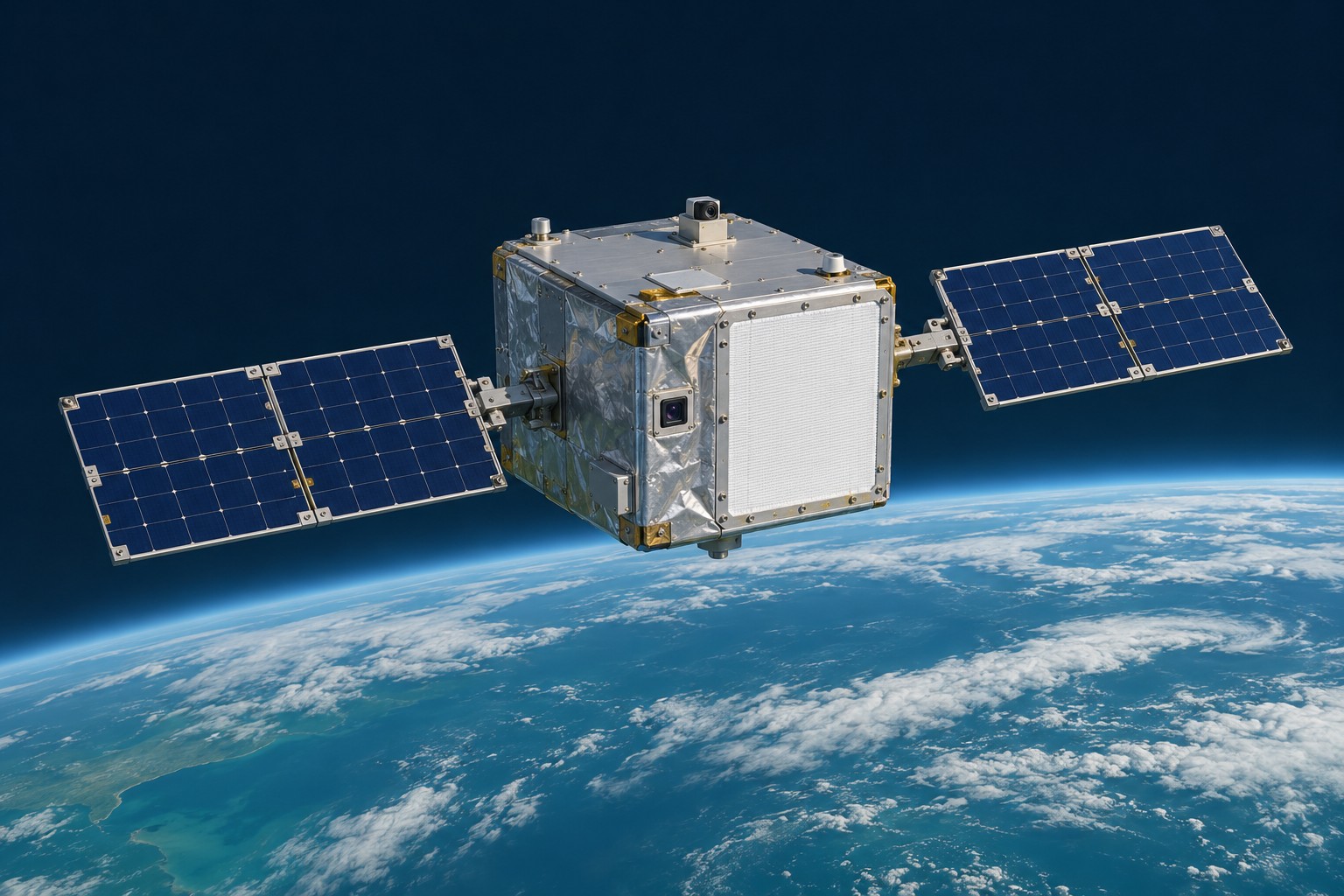
A small uncrewed satellite could demonstrate autonomous recovery during faults and link loss. NEXUS could compare telemetry with predicted equipment state, while local interlocks and AXIOM retain independent authority. Time-stamped measurements would establish whether essential voltage and temperature stayed within limits and whether equipment responded as commanded. [1]
More science from several spacecraft
Qi survey craft could observe a solar-wind disturbance from several locations at once, helping distinguish where a feature is from how it changes over time. ESA’s Proba-3 demonstrated precise autonomous formation flying and used two spacecraft to create an artificial eclipse for solar observations. For a ZENIT follow-on, compare the fraction of useful simultaneous measurements, clock and position error, and data recovered after a lost link against a single-spacecraft observing plan. [6]
Sustained power within a thermal budget
Zorak’s cooling design separates machinery chambers, deployable radiators and independent crew cooling paths. Physical heat rejection limits how long high-power equipment can run. A demonstration needs to measure heat dissipated during operation, what the radiators absorb from the environment, and how the system recovers after one cooling branch is lost. [1] [7]
Using heat rejected ≈ εσAT4 with emissivity 0.90, the Stefan–Boltzmann constant σ, and a clear view to cold space with negligible absorbed heat, a 350 K surface needs about 1,306 m² of emitting area. At 450 K it needs about 478 m². Count both panel faces where both can radiate. Solar and planetary heating, blocked views and temperature limits change the required area.
Longer crew stays with less water resupply
NASA reported 98% water recovery on the ISS after adding brine processing. For an illustrative four-person crew over 180 days, with 4 kg of water entering processing per person per day, raising recovery from 90% to 98% cuts makeup for that stream by about 230 kg. Qualifying a Qi life-support loop also means measuring water quality, oxygen supply, carbon dioxide removal, contamination control, power use and replacement supplies across the mission. [8]
Shielding and advanced propulsion
Protection for defined hazards
The Aurora / Outverse design divides a shielded hull into five layers and five sectors, giving 25 coordinated regions. The arrangement gives engineers a way to allocate power, cooling and sensing during an event. Its protective effect depends on the physical mechanism and the hazard. Use a calibrated charged-particle beam to measure dose and particle spectra behind a representative sector, including secondary radiation, with the field on and off. Compare mass, power and heat load against a passive shield for the same exposure. Use separate hypervelocity impact tests for neutral debris and compare damage with a conventional impact shield. [9]
For Norak, a narrower research question is whether a field can measurably alter ionised entry flow and reduce the heat reaching a surface. The EU’s MEESST project provides a laboratory precedent for probing that interaction. Measure heat flux, electromagnetic power and forces at matched flow conditions before using the effect in a vehicle heat budget. The Earth GENI Inverse concept calls for its own apparatus and named protective effect in the relevant Earth environment. [10]
Momentum from the solar wind
A testable interpretation of ZENIT’s space-stream idea is to exchange momentum with a measured plasma flow. NASA electric-sail research examined that mechanism with solar-wind ions. The design question is how much useful force a real system can deliver for its mass, electrical demand, pointing constraints and local plasma conditions. [11]
Assume pressure of 2 nPa, effective area of 10,000 m² and full transfer of the incident flow’s forward momentum. Pressure × area gives 20 µN. On a 1,000 kg spacecraft that is about 0.63 m/s of velocity change in one year under constant, aligned thrust. Measured coupling area, the variable solar wind and the flight trajectory would determine performance. [11]
For fusion propulsion, measure thrust, propellant flow, system mass and rejected heat across a sustained run before deriving transit times. For IT-Jump, a usable prediction would first specify an observable signal, the energy and momentum exchanged, and what experimental outcome would falsify it. A blinded test and independent replication would establish whether the signal warrants mission-level study.
What would count as success
- Shared SERAT bench
- Show higher essential-service uptime than conventional controls in matched feeder, cooling and telemetry fault trials. Record isolation time, essential-load voltage, peak temperature and time to verified recovery.
- Earth pilot and vessel trial
- Deliver metered heat at the temperature the site needs. On a defined route, establish whether the trial vessel achieves lower lifecycle CO2e per passenger-nautical mile at equal service. Record measured exhaust and availability.
- Uncrewed orbital demonstration
- Keep essential loads within agreed voltage and temperature limits during specified faults and link loss. Use time-stamped telemetry from the purchased spacecraft bus to verify isolation and recovery times.
Set the baseline, allowable limits and success criteria before each trial. The ZENIT Safety Authority can review the measurements and uncertainty to determine whether the result holds across the tested conditions. Repeat trials can establish whether the same approach works on more than one site or spacecraft.
Sources
- The ZENIT Program. Earth cost report, Space cost report, ZC-1 cooling-loss simulation and cooling chambers and heat rejection.
- International Maritime Organization. Lifecycle greenhouse gas intensity of marine fuels.
- U.S. Department of Energy. Hydrogen use and nitrogen oxides.
- U.S. Department of Energy. PEM electrolysis system efficiency benchmarks.
- ITER, fusion gain and engineering breakeven. U.S. Department of Energy, Fusion Science and Technology Roadmap.
- European Space Agency. Proba-3 formation flight and first artificial solar eclipse.
- NASA Small Spacecraft Systems Virtual Institute. Thermal control and spacecraft heat balance.
- NASA. ISS water recovery milestone.
- ZENIT, Outverse Shield overview. NASA, active radiation shielding concept study and impact shielding tests.
- European Commission CORDIS. Experimental results from the MEESST entry research project.
- NASA, electric sail studies. Boudouridis et al., solar-wind dynamic pressure observations.